Audit-ready eTMF for modern clinical trials

A secure, structured study workspace to collect, classify, review, approve, track, and archive essential clinical trial documents across sponsors, CROs, sites, vendors, and auditors.

ICH-GCP

aligned

21 CFR Part 11

ready controls

CDISC TMF

Standard Model structure

Inspection portal

and archive export

1

single source of truth for trial documentation

24/7

visibility into missing, overdue, and rejected artifacts

14

core TMF module groups for full lifecycle coverage

100%

traceable document action history for inspection review

Why eTMF?

Turn trial documentation from a passive archive into a live quality system.

Clinical trials generate thousands of essential documents across startup, approvals, monitoring, safety, investigational product, data management, vendor oversight, and closeout. Shared drives and paper binders make inspection readiness harder than it should be.

Plan

Set expected documents, milestones, ownership, countries, and sites before study activity accelerates.

Collect

Invite users, upload records, classify artifacts, and route documents into the correct TMF location.

Control

Review, approve, supersede, QC, and sign documents with traceable metadata and history.

Inspect

Provide controlled auditor access to finalized records, completeness dashboards, and audit trails.

Archive

Transfer or archive the complete TMF package with structure, metadata, and retention evidence.

Missing and late documents

Expected document planning and real-time dashboards make gaps visible before inspection pressure arrives.

Unclear
versions

Controlled workflows, approvals, superseded status, and document history help teams trust the current record.

Manual QC
burden

Configurable quality checks, metadata rules, and rejection workflows reduce repetitive follow-up.

Inspection
stress

Read-only inspection rooms, search, audit trails, and export packages keep audits calm and organized.

Key Features

Everything teams expect from a professional eTMF workspace.

The platform combines document control, TMF structure, compliance evidence, oversight dashboards, and inspection tools into one governed experience.

Study, country, and site filing

Organize documents at the right operational level with metadata that supports global and site-specific oversight.

TMF model alignment

Configure zones, sections, artifacts, milestones, and owners using CDISC TMF Standard Model principles.

Document workflows

Route uploads through review, approval, QC, rejection, finalization, and archiving with clear accountability.

Electronic signatures

Support signer identity, meaning, timestamp, document version, and complete signature evidence.

Role-based access

Give sponsors, CROs, sites, vendors, monitors, and auditors the right access without exposing unrelated records.

Audit trails

Track creation, modification, review, approval, signature, download, archive, and access events.

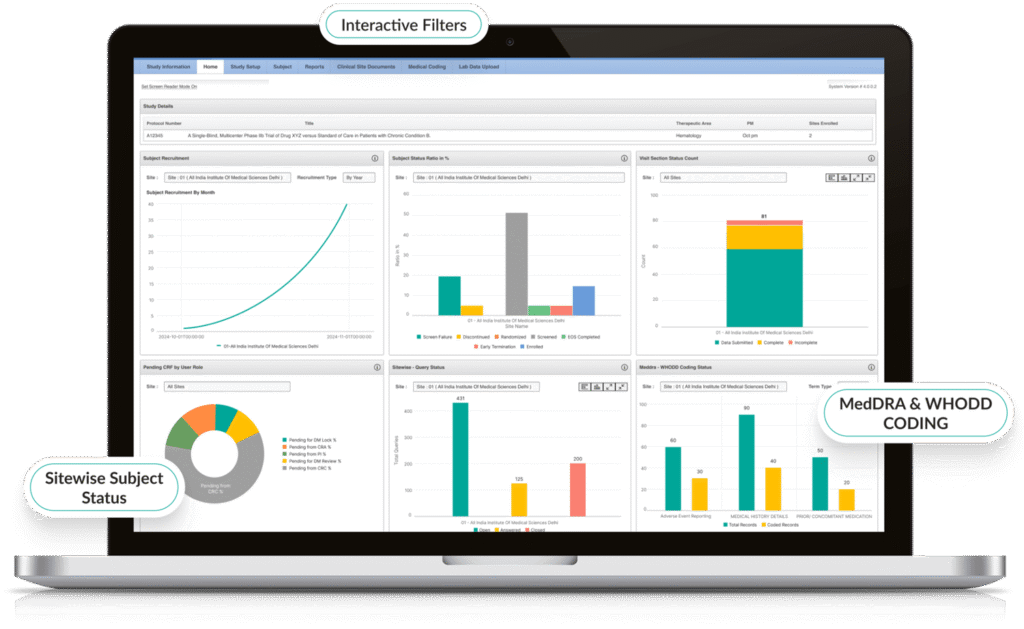
Dashboards and alerts

Monitor completeness, timeliness, quality, overdue tasks, rejected documents, and milestone readiness.

Inspection portal

Create controlled read-only auditor views with finalized records, search, filters, and no disruption to study teams.

Archive and transfer

Export sponsor handover packages with document files, metadata, structure, and retention-ready evidence.


Customer Experience

A cleaner operating rhythm for clinical teams.

The webpage experience should help visitors understand the platform quickly, then guide them into modules, benefits, compliance proof, and demo conversion.

Understand

Hero messaging explains the CTMS promise and makes the platform value clear in seconds.

Compare

Feature and module sections help buyers map needs to specific operational workflows.

Trust

Compliance, audit readiness, and industry benefits address risk and stakeholder concerns.

Act

Clear calls to action give sponsors, CROs, and research teams a direct demo path.

eTMF Modules

Detailed modules for the complete clinical trial lifecycle.

These modules can be presented as product capabilities, navigation groups, or implementation phases depending on your platform design.

Study Workspace

Create protocol-level workspaces with countries, sites, milestones, roles, expected documents, retention rules, and study-specific configuration.

TMF Structure and Filing

Organize documents by zone, section, artifact, trial, country, site, owner, process, and final filing status.

Document Management

Upload, classify, tag, review, approve, reject, replace, supersede, and retrieve trial records with full version history.

Regulatory and Ethics

Manage submissions, authority correspondence, IRB or IEC approvals, consent forms, amendments, approvals, and acknowledgements.

Site Management

Track investigator documents, site qualifications, delegation logs, training evidence, financial disclosures, CVs, licenses, and closeout files.

Monitoring and Oversight

Store monitoring plans, visit reports, follow-up letters, issue logs, oversight evidence, action items, and governance records.

Investigational Product and Device

Control records for supply, device accountability, shipment evidence, temperature logs, randomization, return, and destruction.

Safety and Pharmacovigilance

Maintain safety plans, SAE documentation, SUSAR communications, safety letters, DSMB records, and reconciliation evidence.

Labs, Imaging, and Testing

Track lab certifications, reference ranges, manuals, sample handling evidence, imaging charters, and centralized testing documentation.

Vendor and CRO Oversight

Store vendor qualification records, contracts, work orders, delegation evidence, oversight plans, KPIs, minutes, and escalations.

Data Management and Systems

Manage EDC, eCOA, IRT, database lock, data management plans, edit check documents, reconciliation evidence, and validation records.

Biostatistics and Reporting

Maintain statistical analysis plans, randomization records, interim analysis evidence, TLF specifications, CSR inputs, and final reporting records.

Quality, Audit, and CAPA

Capture QC findings, audit reports, inspection responses, deviations, CAPA plans, effectiveness checks, and quality metrics.

Archive, Transfer, and Inspection Portal

Prepare long-term archives, export complete TMF packages, support CRO-to-sponsor handover, and grant secure inspection access.

Regulatory Compliance

Designed to support GCP, electronic records, and inspection expectations.

The eTMF should help organizations demonstrate that essential records are complete, attributable, legible, contemporaneous, original, accurate, available, and protected for the required retention period.

The DIA TMF Reference Model is now maintained by CDISC as the TMF Standard Model. A modern eTMF can align its taxonomy, artifacts, and metadata with that model while allowing company SOPs, study type, and regional requirements.

Audit-Ready TMF

Inspection readiness should be visible every day.

The best audit experience is calm, controlled, and predictable. Teams can see quality status before auditors arrive, while inspectors receive secure access to finalized records only.

Completeness

Compare expected artifacts against filed, missing, overdue, rejected, and final documents.

Timeliness

Track due dates, study milestones, site activation readiness, and document aging.

Quality

Surface QC issues, correction history, document lineage, and review outcomes.

Access

Open an inspection portal with read-only permissions, curated folders, and search controls.

For Operations Leaders

Live visibility into study health, responsible owners, open gaps, and closeout readiness.

For Quality Teams

Evidence of SOP adherence, QC outcomes, CAPA linkage, and traceable document history.

For Study Teams

Clear work queues, easy filing, fewer status meetings, and faster answers during audits.

Integrated
eClinical Solutions

Streamline Data Management process with most advance, robust and secure ClinVigilant EDC Platform.

FAQ

Questions buyers ask before choosing an eTMF.

Use this section near the bottom of the webpage to answer compliance, implementation, and operational questions before the visitor reaches the demo call-to-action.
What is an eTMF?
An eTMF is an electronic trial master file used to manage the essential documents that demonstrate how a clinical trial was planned, conducted, monitored, reported, and archived.
Requirements depend on jurisdiction and study type. When records are managed electronically, the system should support applicable expectations for electronic records, security, audit trails, signatures, retention, and retrieval.
The TMF Reference Model was formerly associated with DIA and is now maintained by CDISC as the TMF Standard Model. It provides standardized taxonomy and metadata concepts for organizing TMF content.
A properly implemented eTMF can support Part 11 expectations through access control, validation documentation, audit trails, electronic signature controls, and secure record retention.
It provides completeness tracking, fast search, controlled inspector access, document history, QC evidence, and exportable records in a single governed workspace.
Yes. The platform should support structured export, metadata transfer, archive packages, and sponsor handover processes at study closeout or agreed milestones.
Yes. Academic institutes, investigator-led studies, and medical device companies benefit from structured essential document management, controlled reviews, and audit-ready evidence.